Voices from Finland: testimony from our dealer Minikone

Robustness, comfort and technology at the service of the Far North

The Finnish market has also been a landing place for our Eurocomach machines for several years. We interviewed Aleksi Lampinen, co-owner of Minikone, an excellent partner that now manages a fleet of around 70 machines from our brand.

Hi Aleksi, thank you for being here with us. To start, could you tell us about the history of Minikone and how your partnership with Eurocomach began?

Thank you. I have been with Minikone since 2021, but our history with Eurocomach started around 2015 or 2016. We began with a small rental fleet, and our growth has been constant ever since. Today, we have about 60-70 Eurocomach machines in our fleet and have become a point of reference in Finland, also recognizable by our signature white-colored machines. In addition to rentals, we handle new and used sales, spare parts, and technical assistance.
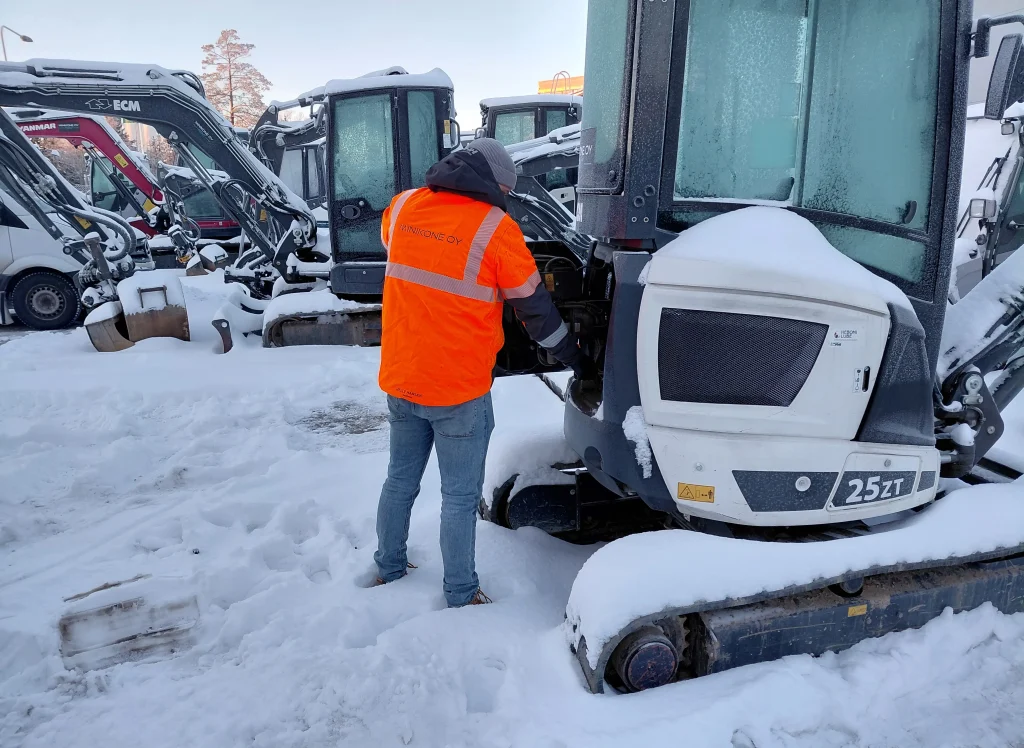
The Finnish market is famous for its extreme weather conditions. Why did you choose our machines to face these challenges?

Mainly for their reliability and robust technology. They are strong machines with powerful engines, yet they maintain a compact size. During the winter, our customers greatly appreciate the comfort: the cabs are well-heated and protected. Since most of our work takes place in the Helsinki area, we need machines that are easy to maneuver in the tight spaces of the capital but powerful enough to handle frozen ground.

Speaking of the operator experience, what impresses your customers the most when they step inside a Eurocomach cab?

Visibility is undoubtedly one of the key strengths. Many of the machines we provide are Zero Tail Swing or short-radius models: this allows operators to have an excellent view of everything happening around the cab, significantly increasing safety on site. Furthermore, they really appreciate the hydraulic precision and general performance; you can feel that these machines are designed for high performance.

From demolition to forestry: tailor-made solutions for the challenges of the Finnish market

Are there any specific sectors or projects where your customers use our excavators?

A very strong sector for us is indoor demolition. Many companies choose our smaller models because they can easily enter buildings to start dismantling from the inside. However, we also see interesting uses in the forestry sector with specific attachments, and even in tunnels. Occasionally, we receive requests for configurations that are rarer in Finland, such as the triple-arm (three-piece boom), which we provide to customers looking for maximum versatility for high-precision work.
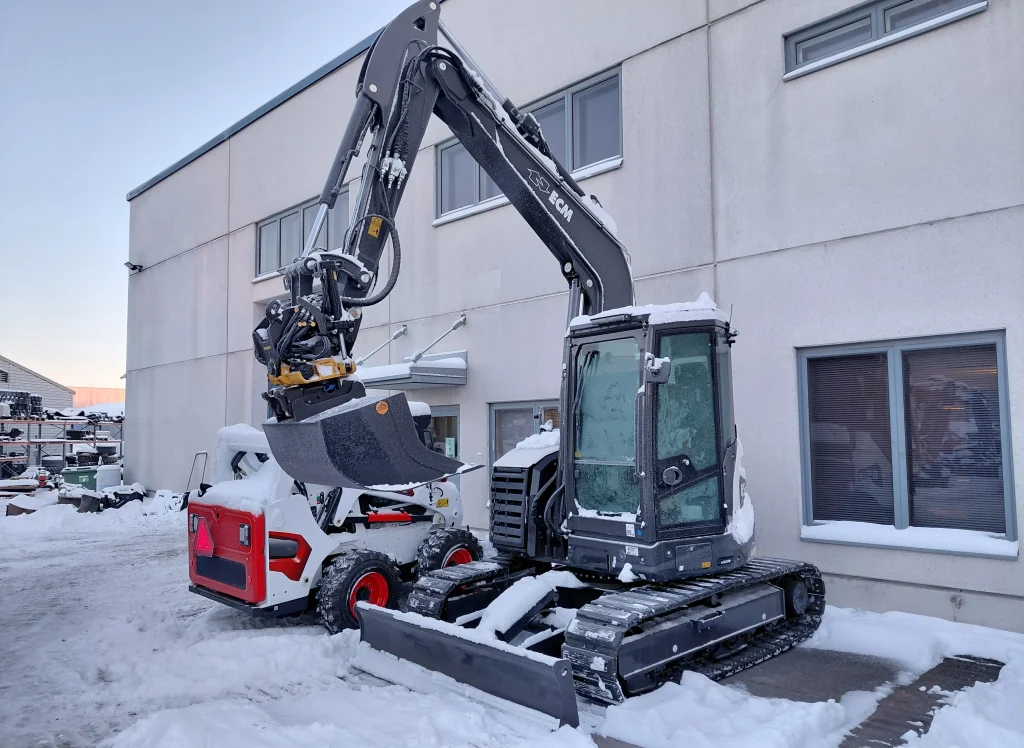
We’ve noticed that in Scandinavia, machine equipment is very specific. What are the most requested attachments?

There is a huge difference here compared to other European markets: in Finland, about 90% of machines over 1.8 tons are equipped with a Tilt Rotator. The ability to rotate and tilt the bucket in every direction has become an indispensable standard for us. Additionally, we often mount timber grabs or cutting heads for forest maintenance.

To conclude, what makes you most proud to represent Eurocomach in your country?

Why Eurocomach? An interview with Guaita & Schoorl B.V.

From Humble Beginnings to the Start of the Partnership

When did your business start and how did the partnership with Eurocomach begin?

The history of Guaita Schoorl goes further back than our current partnership. My partner, Mr. Guaita, sadly passed away last year. He was born in Italy and moved to Holland. I met him when I was 17 years old, as my father, who was a farmer, had bought a bulldozer from him. We started out buying and selling used equipment all over the world.

In 2002 we started our current business. The biggest part of our business remained used equipment, but we slowly began selling new equipment, primarily attachments from suppliers like Cangini Benne and Trevi Benne.

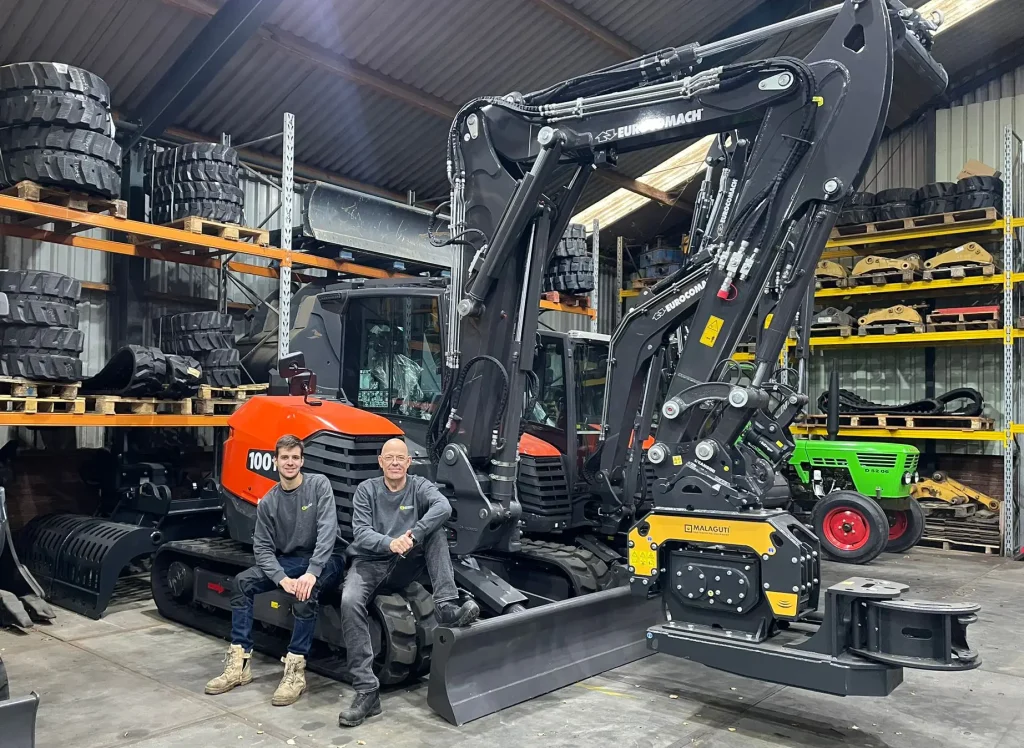
Dealer Eurocomach Guaita

Then, around 2016 or 2017, we met Marco Mosconi, sales Manager. He came here and suggested: “It would be interesting for you to sell Eurocomach.” We started selling them, and from that moment on, it became an important part of our business

We started selling your brand, and from that moment on, it became an important part of our business.

Is there a specific memory from those early days or the first contact that convinced you of that choice?

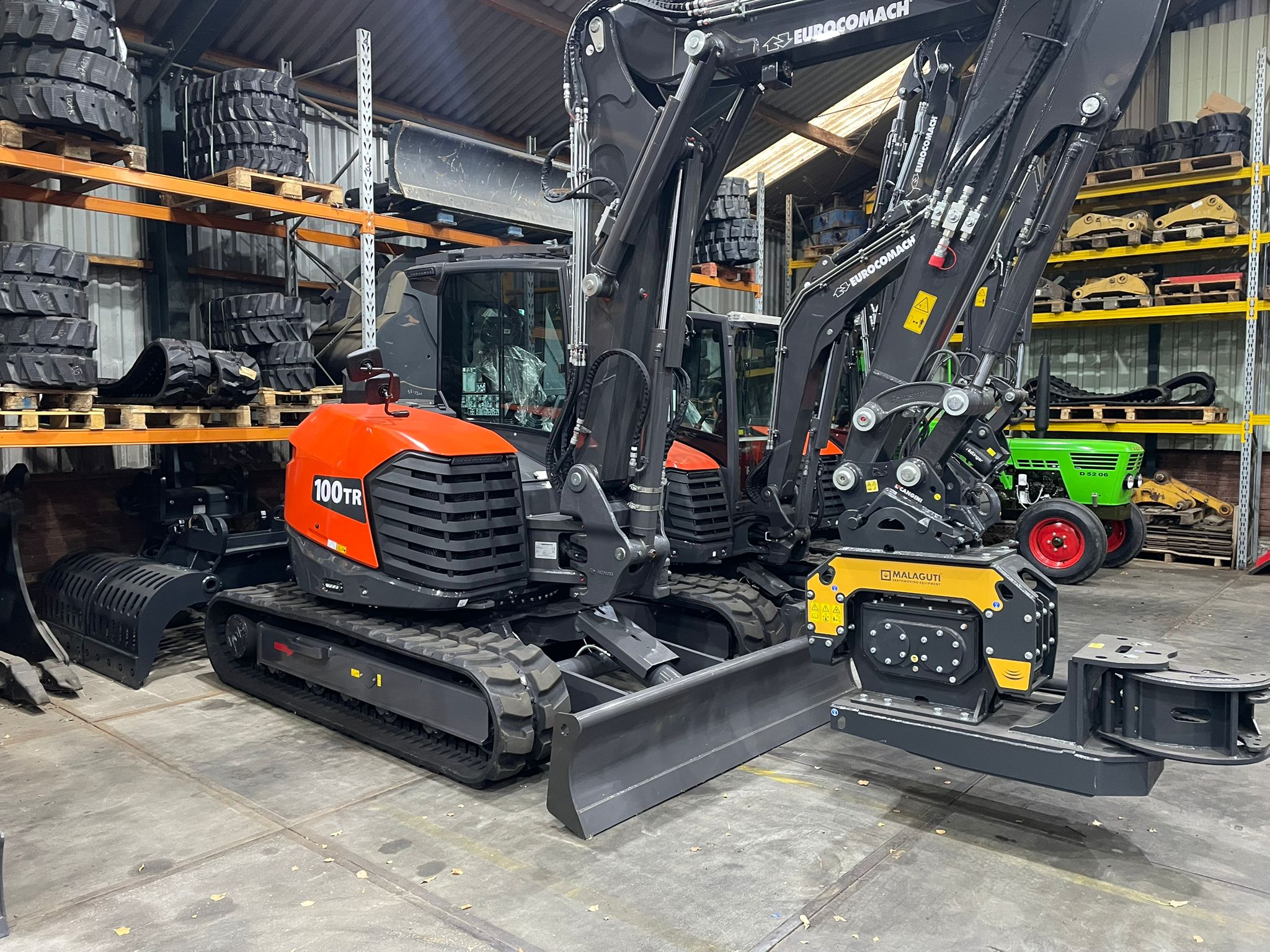
I was more the mechanic; Mr. Guaita was the businessman. When we started with Eurocomach, right from the beginning, it went well. The machines basically sold themselves because we had the 60TR , and you had specialized machines that other brands simply did not offer. You have a niche in the market. We have never sold a mono boom for the 60 model; it’s only the triple boom. That’s what made us big in our part of the country.

Kees also underlines the necessary change in mindset

In the beginning, I was a bit hesitant to start selling new machines because selling in Holland implies a different way of thinking. When you sell machines for export, those machines will go all over the world, and the management of warranty and service follows different logic. If you sell those same machines in Holland to local customers, then you must offer a different space to the clients and a different service, for instance, when they call for technical problems if the machine is broken. So, we had to learn that aspect a little bit.

The Cornerstone of Long-Term Cooperation

What is the one key element that has kept you loyal to the brand throughout this time until now?

The key element? That is success for us: we can make money. If there’s no profit, it’s useless to go on. But we sold a lot of machines in our region, and then the success comes from good reviews from customers.

Customers often talk to each other and have told us that they are satisfied with the machine. This has been and certainly continues to be good publicity. People are not afraid to buy the machine because other customers have shown satisfaction with the brand. This has been the real key factor.

The Technical Advantage in the Netherlands

What role does pride in your local territory play in how you present an Eurocomach machine to your clients?

Sometimes we have to modify the machines to make them work for our customers. For example, we put in bigger steel undercarriage if the customer needs them. We do a lot of things to make the machines ready for the customer. If they want something different, we try to do that for the customer.

When you recommend to a client, which technical feature do you know is crucial for a specific job in this region?

The triple boom is very good for us. We have focused on the 19, 45, 55, and 65 models at the moment. Eurocomach machines are powerful; they lift more weight than the competitor. That is always a big advantage. Furthermore, the machines are more modern because all the movements are in the joysticks and nothing is on the floor. Other brands still have pedals on the floor; that is a bit old-fashioned for us. It is very important that the machine is constantly evolving to have the best engineered technology available.

Eurocomach Support: The Critical Difference

Can you share a specific moment when Eurocomach’s support made the critical difference?

If we have a problem we cannot fix—maybe it’s too difficult for us, or it’s unknown, especially when it comes to electronics—it’s very easy to hook the laptop onto the machine and get assistance from Tosca and Francesca.

They can take control of our laptop and access the machine; they can load the new software, make changes, and repair it so that it starts working again. This is excellent support and a superb form of assistance.

This morning, I had a question from a customer about an alarm on a triple boom machine. I asked Tosca for support, and she gave me an answer right away. We, as dealers, and the customers are provided with all the tools to understand what to do and where to look. Our skilled mechanic, Alex, who has been to Italy to learn about the new machines, is doing a good job with electronics because, obviously, this is one of the most important parts right now.

Del proyecto al diseño, así se crean las máquinas Eurocomach. La voz de Luca

Las excavadoras Eurocomach llaman la atención de nuestros clientes no sólo por sus capacidades técnicas, sino también por su diseño y forma.

Los modelos 3D de Eurocomach dan una idea inicial de la máquina que se presentará al cliente y son de los más populares entre nuestros distribuidores.

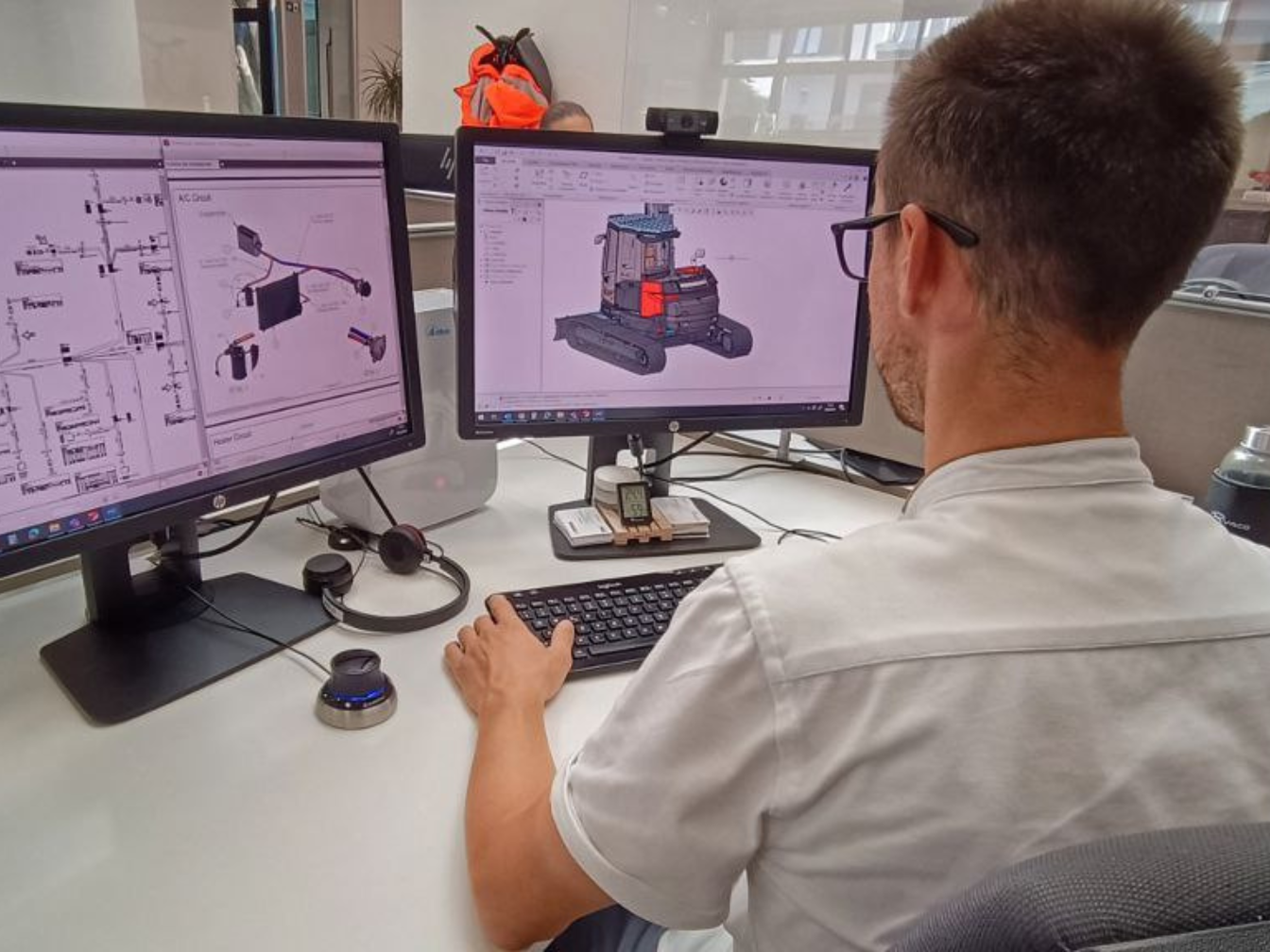
Luca, proyectista, es la mano que da vida a nuestros 3D, los de marca Eurocomach y los personalizados que solicitan nuestros clientes.

Le hemos entrevistado para saber más sobre su trabajo y sobre cómo nace una máquina Eurocomach a partir del proyecto de diseño.

¿Cuándo comenzó su aventura en Sampierana?

Empecé a trabajar para Sampierana en un estudio externo en 2012. Al principio me encargaba del dibujo 2D y éramos proveedores de la empresa para la parte de diseño.

Luego en 2014 me contrató Sampierana y empecé a trabajar aquí con el apoyo de Massimo Barchi, que es nuestro referente como diseñador jefe y responsable de los bocetos a mano alzada. Yo recibía los bocetos a lápiz y los transformaba en realidad a través del 2D.

Desde que estoy aquí, no siempre he hecho diseño de máquinas, sino que he tenido tareas relacionadas con la investigación y la dinámica del diseño.

¿Cuántos de ustedes se dedican actualmente al diseño de máquinas?

Hasta la fecha, sólo me ocupo de este aspecto.

¿Cómo lleva a cabo su trabajo?

Pongo un ejemplo práctico. Los vendedores eligen un modelo para relanzar, que tenga mejores prestaciones que en el pasado: por ejemplo, en comparación con un modelo antiguo, el nuevo podría estar equipado con ventilación para el interior de la cabina, aire acondicionado, un triple brazo específico, una modificación de las rejillas de ventilación que expulsan poco aire. Todo se desarrolla también a partir de las peticiones de los clientes.

Todas estas peticiones me llegan a mí, o mejor dicho, a mi jefe, Fusai, y a partir de ahí empieza una serie de estudios. Junto con mis colegas, intento encontrar la manera de hacerlos reales y concretos.

En este trabajo nos dividimos las tareas para finalizar el proyecto.

Además de conocimientos de diseño, ¿tiene también de ingeniería??

Yo no, vengo de una escuela de formación profesional donde aprendí 2D. La experiencia en un estudio externo, sin embargo, me ha ayudado a acumular una sólida experiencia en varios frentes. Precisamente porque mi función está más relacionada con el dibujo, éste se transmite luego a una de nuestras personas con conocimientos de ingeniería para que se cruce con los requisitos de diseño.

¿Desde CNH ha sentido que ha aprendido algo nuevo?

Me he dado cuenta de que desde que nos incorporamos también hemos dedicado espacio y atención a la gestión de componentes, a que la carpintería sea lo más sencilla posible.

Una vez realizado el modelo de la máquina en formato tridimensional, ¿comienza la producción del modelo?

No, empiezan los prototipos. Cuando hemos terminado de diseñar toda la máquina vamos a los prototipos para ver si hay algún problema, si hay que actualizar el modelo tridimensional. Se montan de ocho a nueve máquinas en la línea para ver si la parte de producción funciona y después empezamos la producción en serie.

En mi función voy muy poco a los prototipos, porque allí hay una persona dedicada que trabaja junto a los operarios y les explica los distintos detalles.

Antes de fabricar los prototipos hago los renders y también diseño las pegatinas para el departamento de Eurocomach.

En su puesto, ¿también está en contacto con otras oficinas?

La escalera que sigue mi trabajo empieza en ventas y corresponde a comercial, jefe de proyecto y diseño. Así que me relaciono más con ventas y compras y, a menudo, con piezas de repuesto para componentes opcionales.

¿Próximas metas?

Como siguiente paso, también me gustaría diseñar cargadoras sobre ruedas.